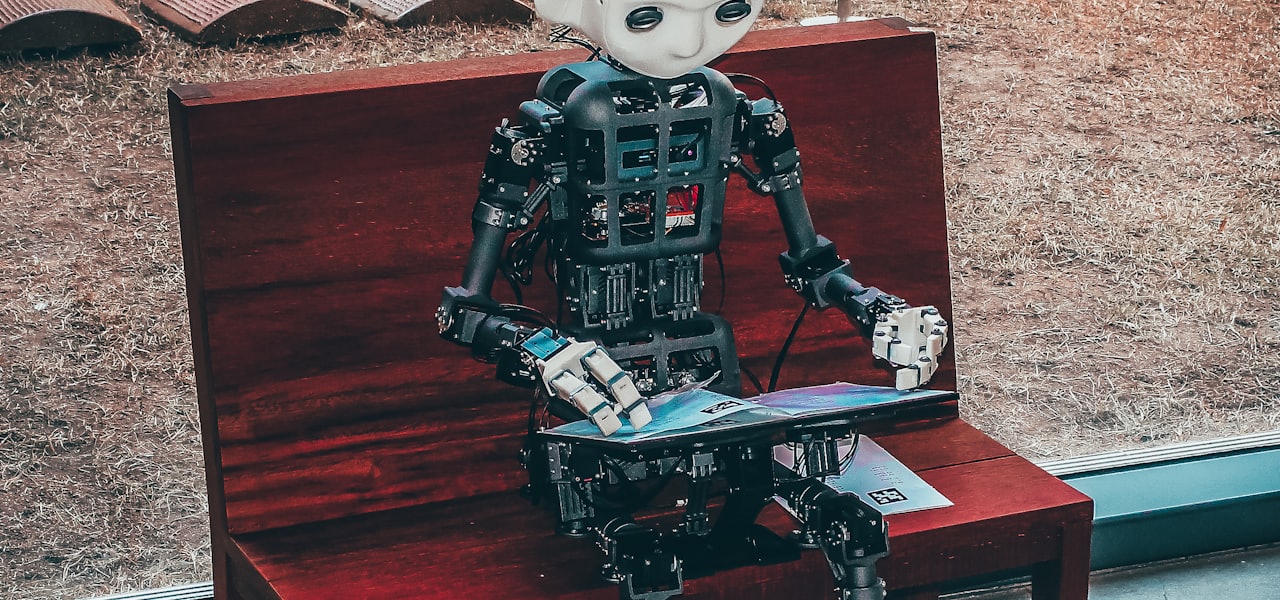
A percept is the input that an intelligent agent is perceiving at any given moment. It is essentially the same concept as a percept in psychology, except that it is being perceived not by the brain but by the agent. A percept is detected by a sensor, often a camera, processed accordingly, and acted upon by an actuator. Each percept is added to a "percept sequence", which is a complete history of each percept ever detected. The agent's action at any instant point may depend on the entire percept sequence up to that particular instant point. An intelligent agent chooses how to act not only based on the current percept, but the percept sequence. The next action is chosen by the agent function, which maps every percept to an action. For example, if a camera were to record a gesture, the agent would process the percepts, calculate the corresponding spatial vectors, examine its percept history, and use the agent program (the application of the agent function) to act accordingly. == Examples == Examples of percepts include inputs from touch sensors, cameras, infrared sensors, sonar, microphones, mice, and keyboards. A percept can also be a higher-level feature of the data, such as lines, depth, objects, faces, or gestures.
Uniform convergence in probability
Uniform convergence in probability is a form of convergence in probability in statistical asymptotic theory and probability theory. It means that, under certain conditions, the empirical frequencies of all events in a certain event-family uniformly converge to their theoretical probabilities. Uniform convergence in probability has applications to statistics as well as machine learning as part of statistical learning theory. Specifically, the Glivenko-Cantelli theorem and the homonymous classes of functions are fundamentally related to uniform convergence. The law of large numbers says that, for each single event A {\displaystyle A} , its empirical frequency in a sequence of independent trials converges (with high probability) to its theoretical probability. In many application however, the need arises to judge simultaneously the probabilities of events of an entire class S {\displaystyle S} from one and the same sample. Moreover, it, is required that the relative frequency of the events converge to the probability uniformly over the entire class of events S {\displaystyle S} . The Uniform Convergence Theorem gives a sufficient condition for this convergence to hold. Roughly, if the event-family is sufficiently simple (its VC dimension is sufficiently small) then uniform convergence holds. == Definitions == For a class of predicates H {\displaystyle H} defined on a set X {\displaystyle X} and a set of samples x = ( x 1 , x 2 , … , x m ) {\displaystyle x=(x_{1},x_{2},\dots ,x_{m})} , where x i ∈ X {\displaystyle x_{i}\in X} , the empirical frequency of h ∈ H {\displaystyle h\in H} on x {\displaystyle x} is Q ^ x ( h ) = 1 m | { i : 1 ≤ i ≤ m , h ( x i ) = 1 } | . {\displaystyle {\widehat {Q}}_{x}(h)={\frac {1}{m}}|\{i:1\leq i\leq m,h(x_{i})=1\}|.} The theoretical probability of h ∈ H {\displaystyle h\in H} is defined as Q P ( h ) = P { y ∈ X : h ( y ) = 1 } . {\displaystyle Q_{P}(h)=P\{y\in X:h(y)=1\}.} The Uniform Convergence Theorem states, roughly, that if H {\displaystyle H} is "simple" and we draw samples independently (with replacement) from X {\displaystyle X} according to any distribution P {\displaystyle P} , then with high probability, the empirical frequency will be close to its expected value, which is the theoretical probability. Here "simple" means that the Vapnik–Chervonenkis dimension of the class H {\displaystyle H} is small relative to the size of the sample. In other words, a sufficiently simple collection of functions behaves roughly the same on a small random sample as it does on the distribution as a whole. The Uniform Convergence Theorem was first proved by Vapnik and Chervonenkis using the concept of growth function. == Uniform Convergence Theorem == The statement of the Uniform Convergence Theorem is as follows: If H {\displaystyle H} is a set of { 0 , 1 } {\displaystyle \{0,1\}} -valued functions defined on a set X {\displaystyle X} and P {\displaystyle P} is a probability distribution on X {\displaystyle X} then for ε > 0 {\displaystyle \varepsilon >0} and m {\displaystyle m} a positive integer, we have: P m { | Q P ( h ) − Q x ^ ( h ) | ≥ ε for some h ∈ H } ≤ 4 Π H ( 2 m ) e − ε 2 m / 8 . {\displaystyle P^{m}\{|Q_{P}(h)-{\widehat {Q_{x}}}(h)|\geq \varepsilon {\text{ for some }}h\in H\}\leq 4\Pi _{H}(2m)e^{-\varepsilon ^{2}m/8}.} In the above, for any x ∈ X m , {\displaystyle x\in X^{m},} Q P ( h ) = P { ( y ∈ X : h ( y ) = 1 } , {\displaystyle Q_{P}(h)=P\{(y\in X:h(y)=1\},} Q ^ x ( h ) = 1 m | { i : 1 ≤ i ≤ m , h ( x i ) = 1 } | {\displaystyle {\widehat {Q}}_{x}(h)={\frac {1}{m}}|\{i:1\leq i\leq m,h(x_{i})=1\}|} and | x | = m . {\displaystyle |x|=m.} P m {\displaystyle P^{m}} indicates that the probability is taken over x {\displaystyle x} consisting of m {\displaystyle m} i.i.d. draws from the distribution P . {\displaystyle P.} Finally, the growth function Π H {\displaystyle \Pi _{H}} is defined in the following way, for any { 0 , 1 } {\displaystyle \{0,1\}} -valued functions H {\displaystyle H} over X {\displaystyle X} and for any natural number m {\displaystyle m} : Π H ( m ) = max | { h ∩ D : D ⊆ X , | D | = m , h ∈ H } | . {\displaystyle \Pi _{H}(m)=\max |\{h\cap D:D\subseteq X,|D|=m,h\in H\}|.} From the point of view of Learning Theory one can consider H {\displaystyle H} to be the Concept/Hypothesis class defined over the instance set X {\displaystyle X} . Crucially, the Sauer–Shelah lemma implies that Π H ( m ) ≤ m d {\displaystyle \Pi _{H}(m)\leq m^{d}} , where d {\displaystyle d} is the VC dimension of H {\displaystyle H} . == Proof of the Uniform Convergence Theorem == and are the sources of the proof below. Before we get into the details of the proof of the Uniform Convergence Theorem we will present a high level overview of the proof. Symmetrization: We transform the problem of analyzing | Q P ( h ) − Q ^ x ( h ) | ≥ ε {\displaystyle |Q_{P}(h)-{\widehat {Q}}_{x}(h)|\geq \varepsilon } into the problem of analyzing | Q ^ r ( h ) − Q ^ s ( h ) | ≥ ε / 2 {\displaystyle |{\widehat {Q}}_{r}(h)-{\widehat {Q}}_{s}(h)|\geq \varepsilon /2} , where r {\displaystyle r} and s {\displaystyle s} are i.i.d samples of size m {\displaystyle m} drawn according to the distribution P {\displaystyle P} . One can view r {\displaystyle r} as the original randomly drawn sample of length m {\displaystyle m} , while s {\displaystyle s} may be thought as the testing sample which is used to estimate Q P ( h ) {\displaystyle Q_{P}(h)} . Permutation: Since r {\displaystyle r} and s {\displaystyle s} are picked identically and independently, so swapping elements between them will not change the probability distribution on r {\displaystyle r} and s {\displaystyle s} . So, we will try to bound the probability of | Q ^ r ( h ) − Q ^ s ( h ) | ≥ ε / 2 {\displaystyle |{\widehat {Q}}_{r}(h)-{\widehat {Q}}_{s}(h)|\geq \varepsilon /2} for some h ∈ H {\displaystyle h\in H} by considering the effect of a specific collection of permutations of the joint sample x = r | | s {\displaystyle x=r||s} . Specifically, we consider permutations σ ( x ) {\displaystyle \sigma (x)} which swap x i {\displaystyle x_{i}} and x m + i {\displaystyle x_{m+i}} in some subset of 1 , 2 , . . . , m {\displaystyle {1,2,...,m}} . The symbol r | | s {\displaystyle r||s} means the concatenation of r {\displaystyle r} and s {\displaystyle s} . Reduction to a finite class: We can now restrict the function class H {\displaystyle H} to a fixed joint sample and hence, if H {\displaystyle H} has finite VC Dimension, it reduces to the problem to one involving a finite function class. We present the technical details of the proof. It should be stressed that this proof glosses over details like the measurability of the events V {\displaystyle V} and R {\displaystyle R} ; measurability is granted in the case of H {\displaystyle H} being finite or countable, but this is not normally the case in standard applications of the theorem (e.g. for statistical learning theory or to prove the Glivenko-Cantelli theorem). To get measurability, one needs to use a notion of separability of the underlying space, possibly related to H {\displaystyle H} . === Symmetrization === Lemma: Let V = { x ∈ X m : | Q P ( h ) − Q ^ x ( h ) | ≥ ε for some h ∈ H } {\displaystyle V=\{x\in X^{m}:|Q_{P}(h)-{\widehat {Q}}_{x}(h)|\geq \varepsilon {\text{ for some }}h\in H\}} and R = { ( r , s ) ∈ X m × X m : | Q r ^ ( h ) − Q ^ s ( h ) | ≥ ε / 2 for some h ∈ H } . {\displaystyle R=\{(r,s)\in X^{m}\times X^{m}:|{\widehat {Q_{r}}}(h)-{\widehat {Q}}_{s}(h)|\geq \varepsilon /2{\text{ for some }}h\in H\}.} Then for m ≥ 2 ε 2 {\displaystyle m\geq {\frac {2}{\varepsilon ^{2}}}} , P m ( V ) ≤ 2 P 2 m ( R ) {\displaystyle P^{m}(V)\leq 2P^{2m}(R)} . Proof: By the triangle inequality, if | Q P ( h ) − Q ^ r ( h ) | ≥ ε {\displaystyle |Q_{P}(h)-{\widehat {Q}}_{r}(h)|\geq \varepsilon } and | Q P ( h ) − Q ^ s ( h ) | ≤ ε / 2 {\displaystyle |Q_{P}(h)-{\widehat {Q}}_{s}(h)|\leq \varepsilon /2} then | Q ^ r ( h ) − Q ^ s ( h ) | ≥ ε / 2 {\displaystyle |{\widehat {Q}}_{r}(h)-{\widehat {Q}}_{s}(h)|\geq \varepsilon /2} . Therefore, P 2 m ( R ) ≥ P 2 m { ∃ h ∈ H , | Q P ( h ) − Q ^ r ( h ) | ≥ ε and | Q P ( h ) − Q ^ s ( h ) | ≤ ε / 2 } = ∫ V P m { s : ∃ h ∈ H , | Q P ( h ) − Q ^ r ( h ) | ≥ ε and | Q P ( h ) − Q ^ s ( h ) | ≤ ε / 2 } d P m ( r ) = A {\displaystyle {\begin{aligned}&P^{2m}(R)\\[5pt]\geq {}&P^{2m}\{\exists h\in H,|Q_{P}(h)-{\widehat {Q}}_{r}(h)|\geq \varepsilon {\text{ and }}|Q_{P}(h)-{\widehat {Q}}_{s}(h)|\leq \varepsilon /2\}\\[5pt]={}&\int _{V}P^{m}\{s:\exists h\in H,|Q_{P}(h)-{\widehat {Q}}_{r}(h)|\geq \varepsilon {\text{ and }}|Q_{P}(h)-{\widehat {Q}}_{s}(h)|\leq \varepsilon /2\}\,dP^{m}(r)\\[5pt]={}&A\end{aligned}}} since r {\displaystyle r} and s {\displaystyle s} are independent. Now for r ∈ V {\displaystyle r\in V} fix an h ∈ H {\displaystyle h\in H} such that | Q P ( h ) − Q ^ r ( h ) | ≥ ε {\displaystyle |Q_{P}(h)-{\widehat {Q}}_{r}(h)|\geq \varepsilon } . For this h {\displaystyle h} , we shall
Time-inhomogeneous hidden Bernoulli model
Time-inhomogeneous hidden Bernoulli model (TI-HBM) is an alternative to hidden Markov model (HMM) for automatic speech recognition. Contrary to HMM, the state transition process in TI-HBM is not a Markov-dependent process, rather it is a generalized Bernoulli (an independent) process. This difference leads to elimination of dynamic programming at state-level in TI-HBM decoding process. Thus, the computational complexity of TI-HBM for probability evaluation and state estimation is O ( N L ) {\displaystyle O(NL)} (instead of O ( N 2 L ) {\displaystyle O(N^{2}L)} in the HMM case, where N {\displaystyle N} and L {\displaystyle L} are number of states and observation sequence length respectively). The TI-HBM is able to model acoustic-unit duration (e.g. phone/word duration) by using a built-in parameter named survival probability. The TI-HBM is simpler and faster than HMM in a phoneme recognition task, but its performance is comparable to HMM. For details, see [1] or [2].
Adobe GoLive
Adobe GoLive was a WYSIWYG HTML editor and web site management application from Adobe Systems. It replaced Adobe PageMill as Adobe's primary HTML editor and was itself discontinued in favor of Dreamweaver. The last version of GoLive that Adobe released was GoLive 9. == History == GoLive originated as the flagship product of a company named GoNet Communication, Inc. then based in Menlo Park, California, and the development company GoNet Communications GmbH in Hamburg, Germany, in 1996. Later GoNet changed its name to GoLive Systems, Inc, and the name of its product to GoLive CyberStudio. Adobe acquired GoLive in 1999 and re-branded the GoLive CyberStudio product to what became Adobe GoLive. Adobe took over the Hamburg office as an Adobe development site to continue to develop the product. At the time of the acquisition, CyberStudio was a Macintosh-only application. In the spring of 1999 Adobe released Adobe GoLive for both Macintosh and Microsoft Windows. The first versions of Dreamweaver and CyberStudio were released in a similar timeframe. However, Dreamweaver eventually became the dominant WYSIWYG HTML editor in market share. After the Adobe acquisition of Macromedia (the company that had owned Dreamweaver), GoLive was progressively re-targeted toward Adobe's traditional design market, and the product became better integrated with Adobe's existing suite of design-oriented software products and less focused on the professional web development market. The Adobe CS2 Premium suite contained GoLive CS2. With the release of Creative Suite 3, Adobe integrated Dreamweaver as a replacement for GoLive and released GoLive 9 as a standalone product. In April 2008, Adobe announced that sales and development of GoLive would cease in favor of Dreamweaver. == General description and distinctive aspects == GoLive incorporated a largely modeless workflow that relied heavily on drag-and-drop. Most user interaction was done via a contextual inspector rather than the modal workflow found in Dreamweaver. Among its features were a separate editor for tables that supported nesting, and a two-dimensional panel for applying CSS styles to elements. GoLive supported drag-and-drop of native Adobe Photoshop and Adobe Illustrator files via what the company called "Smart Objects", which then automatically guided the user through saving those files in web-supported formats. Updates to the original Photoshop or Illustrator assets were automatically tracked by GoLive. It also implemented a tool called "Components" which allowed updates to interface elements throughout a site to be updated globally by changing one single file. As a website management tool, GoLive allowed users to transfer and publish content directly from within the application, and allowed individual files to be excluded from uploading. == Features == One of the new features of GoLive version 5 was Dynamic Link, which was a method of creating dynamic, database-driven web content without the need to know a server-side language and with full WYSIWYG support in the GoLive user interface. GoLive had a powerful set of extensibility API which could be used to add additional functionality to the product. The GoLive SDK provided interfaces which allowed developers to use a combination of XML, JavaScript and C/C++ to create plugins for the product. The extensibility API allowed developers access to custom drawing and event handling using JavaScript, as well as a full JavaScript debugger and command line interpreter. This allowed intermediate-level developers using interpreted JavaScript to create sophisticated user interfaces. == Language and framework structure == Adobe GoLive is coded in the C++ programming language. It uses a custom C++ framework called SCL (Simple Class Library) which was initially built from scratch by the engineers at GoLive Systems Inc. The SCL framework was also used in the short-lived Adobe Atmosphere 3D software. == Release history == As the final version, GoLive 9 was discontinued in April 2008.
Clapper (service)
Clapper is an American short-form video-hosting service headquartered in Dallas, Texas. It was founded in 2020 by Edison Chen as an alternative for TikTok for mature audiences. The app is functionally similar to TikTok and includes tipping and e-commerce features. Following an influx of far-right content in early 2021, Clapper strengthened its moderation practices. It achieved 2 million monthly active users by 2023, and the number of downloads increased after a U.S. bill that would potentially ban TikTok in the country was signed in 2024. == History == With its offices in Dallas, Texas, Clapper was founded in July 2020 by Chinese-American entrepreneur Edison Chen. Chen considered that most online platforms, such as TikTok, were being targeted to young generations, such as Generation Z. He then concepted Clapper as a service with short-form content for mature audiences among Generation X and millennials, while not intending to compete directly with TikTok. Clapper averaged fewer than ten thousand daily active users during 2020, reaching 500 thousand downloads in the next year. Initially without paying for external advertising, the company raised about $3 million during a 2021 seed funding round. In 2023, the app reportedly reached about 300 to 400 thousand daily active users and 2 million monthly active users. The average user was between the ages of 35 and 55. Following the April 2024 signing of the Protecting Americans from Foreign Adversary Controlled Applications Act, which would potentially enact a ban on TikTok in the U.S. in January 2025, Clapper averaged 200 thousand weekly downloads. In 2025, before the day scheduled for the ban (January 19), TikTok users migrated to other apps. As a result, Clapper received 1.4 million new downloads in a week preceding the date. It was listed as the third most-downloaded free app on Apple's App Store on January 14, behind Xiaohongshu and Lemon8, and the term "TikTok refugee" became a trending term. == Features == Clapper presents similarities with TikTok in its layout, including "Following" and "For You" tabs with videos up to three minutes long that can be liked, commented on or shared. A "Clapback" feature allows users to create responses to videos from others. Users can create livestreams and chat rooms in the app. Users can tip Clapper creators through its Clapper Fam monetization feature, in place of in-app advertisements. The Clapper Shop allows for e-commerce between users. The service had distributed $10 million to its users in total by 2023, according to Clapper CEO Chen. == Content == Clapper includes a policy requiring users to be at least 17 years of age, although Clapper CEO Chen described that "there is no adult content" on the platform. Lindsay Dodgson of Business Insider described the content as generally outdated and "reminiscent of 'getting owned' compilations of the earlier internet." The Washington Post's Tatum Hunter characterized Clapper as including sexual or engagement baiting content more prevalently than TikTok. === Moderation === Clapper's team, which had fifteen employees in early 2021, initially stated it would not moderate content as strictly as TikTok and would mostly rely on user reports. Following that year's January 6 United States Capitol attack, far-right conservative videos promoting QAnon and anti-vaccine conspiracy theories appeared on Clapper's "For You" page to a substantial degree for weeks. The videos were made in protest against decisions by platforms, particularly TikTok, to ban such content. Clapper's team stated in January 10 that its rules prohibiting incitements to violence would be strictly enforced. By February, videos and accounts promoting the conspiracy theories had been removed, and QAnon-related content was banned permanently. Clapper's team hired more content auditors and implemented moderation by artificial intelligence for further community guideline violations.
Data exploration
Data exploration is an approach similar to initial data analysis, whereby a data analyst uses visual exploration to understand what is in a dataset and the characteristics of the data, rather than through traditional data management systems. These characteristics can include size or amount of data, completeness of the data, correctness of the data, possible relationships amongst data elements or files/tables in the data. Data exploration is typically conducted using a combination of automated and manual activities. Automated activities can include data profiling or data visualization or tabular reports to give the analyst an initial view into the data and an understanding of key characteristics. This is often followed by manual drill-down or filtering of the data to identify anomalies or patterns identified through the automated actions. Data exploration can also require manual scripting and queries into the data (e.g. using languages such as SQL or R) or using spreadsheets or similar tools to view the raw data. All of these activities are aimed at creating a mental model and understanding of the data in the mind of the analyst, and defining basic metadata (statistics, structure, relationships) for the data set that can be used in further analysis. Once this initial understanding of the data is had, the data can be pruned or refined by removing unusable parts of the data (data cleansing), correcting poorly formatted elements and defining relevant relationships across datasets. This process is also known as determining data quality. Data exploration can also refer to the ad hoc querying or visualization of data to identify potential relationships or insights that may be hidden in the data and does not require to formulate assumptions beforehand. Traditionally, this had been a key area of focus for statisticians, with John Tukey being a key evangelist in the field. Today, data exploration is more widespread and is the focus of data analysts and data scientists; the latter being a relatively new role within enterprises and larger organizations. == Interactive Data Exploration == This area of data exploration has become an area of interest in the field of machine learning. This is a relatively new field and is still evolving. As its most basic level, a machine-learning algorithm can be fed a data set and can be used to identify whether a hypothesis is true based on the dataset. Common machine learning algorithms can focus on identifying specific patterns in the data. Many common patterns include regression and classification or clustering, but there are many possible patterns and algorithms that can be applied to data via machine learning. By employing machine learning, it is possible to find patterns or relationships in the data that would be difficult or impossible to find via manual inspection, trial and error or traditional exploration techniques. == Software == Trifacta – a data preparation and analysis platform Paxata – self-service data preparation software Alteryx – data blending and advanced data analytics software Microsoft Power BI - interactive visualization and data analysis tool OpenRefine - a standalone open source desktop application for data clean-up and data transformation Tableau software – interactive data visualization software
17LIVE
17LIVE is an international entertainment platform. As of 2024, 17LIVE is the #3 live broadcasting platform globally, formed by its flagship live stream app 17LIVE (LIVIT in English markets), MEME Live and live stream e-commerce platforms HandsUP and OrderPally. == History == 17LIVE was first founded in Taiwan in 2015 by Jeffery Huang. The company has maintained its leading position since its entry into the Japan market in 2017, becoming the biggest platform for live entertainment in Japan, Taiwan, Hong Kong, and other countries. In 2017, 17 closed out US$33M in series B round to merge with dating software Paktor, with Joseph Phua (Co-founder of Paktor) taking over the leadership of 17LIVE as CEO and Co-founder, as well as to enter the Japan and Hong Kong market. Within one year, 17 Media became the #1 market leader in Japan. In 2018, the company raised $25M in series C round as it got ready for US IPO, which failed to materialize. 17LIVE had an unsuccessful US IPO attempt in 2018. Since then, the company reformed and transformed the business. Some key initiatives include the hiring of current CEO Hirofumi Ono, spin-off of Paktor (dating software business unit), full buy-out of founder Jeffery Huang, acquisition of MEME and HandsUp, and more. Despite the failed IPO attempt, the company continued to push for international expansion, including creating ‘LIVIT’ for the English-speaking markets to enter US, India, and North Africa. In 2019, 17's flagship live streaming app reached 10M downloads in Japan, and the business continues to push for both organic and inorganic expansion. Some key M&A highlights in the year include the acquisition of MEME Live in Southeast Asia, as well as HandsUp, a live e-commerce platform. In 2020, M17 closed out $26.5M in Series D round to continue organic growth in Japan, US and Middle East. In the same year, the company also sold its dating app business, Parktor, to rationalise M17 into a live-stream pure play business, followed by the appointment of its current Chairman, Joseph Phua, and previous Global CEO, Hirofumi Ono. With the buy-out and departure of founder Jeff Huang, the parent holding company M17 Entertainment Limited was officially renamed as 17 LIVE Group. An estimated 60 million users registered in 154 countries and territories in April 2022. In 2022, September, 17LIVE announced Group CEO Hirofumi Ono steps down. Alex Lien takes over the leadership as new Group COO; Jing Shen Ng appointed Group CTO. In 2023, March, 17LIVE announced Alex Lien promoted to Global CEO. Kenta Masuda appointed as Global CFO. === Collaboration with Ayumi Hamasaki === To celebrate its 4th anniversary, 17LIVE collaborated with Japanese singer-songwriter Ayumi Hamasaki, who led the 17LIVE 4th Anniversary meets Ayumi Hamasaki series starting October 18, 2021. Along with composer and arranger Yuta Nakano, Hamasaki judged auditioning artists competing for the chance to work with her and her production team for a debut single. The series was streamed live on the 17LIVE website, the final airing on November 11. The eventual winner was named as Yoshitaka_song. When asked why she collaborated with 17LIVE as a producer, Hamasaki commented: "Although the world has become like this (during COVID-19), I believe that the art of entertainment can give people dreams, hope, courage, and strength. I hope that kind of light will continue to shine through the entertainment industry." == Features == On 17LIVE, artists (LIVERs) are able to broadcast live, and post photos and videos from their album. The app has been designed for LIVERs to simply open the App, and start sharing contents without the need to edit or professionally curate their videos. The platform cultivates LIVERs, supports them with a local content management team, and provides artists with various functions, such as real time chatting, gifting, fan clubs, interactive competition and events. Today, 17LIVE has 46 thousands contracted artists and more than 2.3 million MAU, who spend 44 minutes on the platform every day. 17LIVE continues to advocate content-driven philosophy and delivers diverse topics, from politics and music to entertainment, to broaden its audience groups. 17LIVE also hosts offline flash events and concerts to attract new users and support LIVERs better connect with their fans. == Operation == 17LIVE has over 700 employees globally. The app provides few monetization models for LIVERs on the platform, including: Gifting: user / fans buy virtual gifts on the app to send to their favored LIVERs. Subscription: monthly subscription fan club service for access to exclusive content Pay-per-view: ticket service for online streaming concerts E-commerce: live e-commerce platform In the past, 17LIVE has encountered some regulatory headwinds with reported incidents of inappropriate livestream content on the platform. The incidents were direct results of the lack of oversight and supervision capability in place in the business at the time. Over the years, 17LIVE claims to have put in tremendous manpower and effort into improving, monitoring and maintaining control over both the live stream content and the KYC procedures and systems.